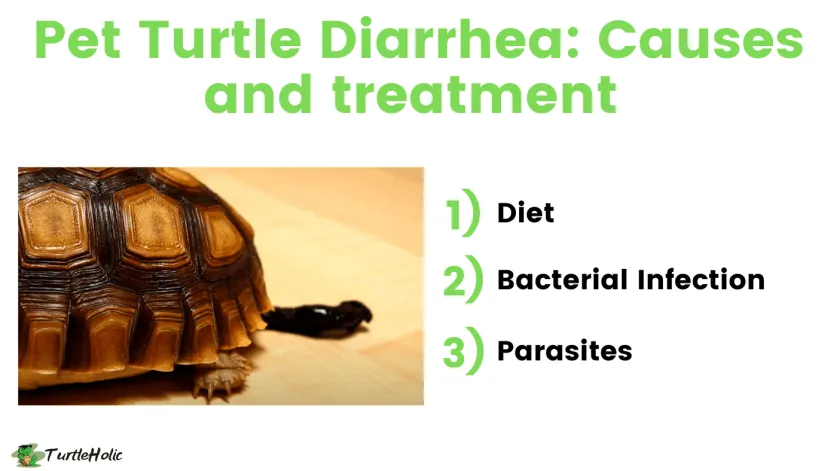
Loose stool in a turtle can reflect several problems. Diet changes, infection, or intestinal parasites may be considered, but the color of the stool does not tell you which cause is present.
What does turtle diarrhea look like?
Watch for a change from the animal’s usual stool, including unusually loose material or undigested food. Stool appearance varies with diet and species. Photographs can document a change; they cannot identify a particular infection.
Diet and recent changes
Record what the turtle has eaten, recent diet changes, access to unsuitable objects, and any supplements or medicines. Avoid adding extra fruit or changing to a promoted pellet as a treatment for unexplained diarrhea. A suitable diet matters, but illness should not be assumed to be a feeding mistake.
Parasites and fecal testing
Intestinal parasites are investigated with fecal testing. Seeing—or not seeing—external ticks or mites does not establish an intestinal diagnosis. Ask a reptile veterinarian whether to bring a fresh stool sample and how to collect and store it for the visit.
When to contact a veterinarian
Contact a reptile veterinarian about persistent or recurring diarrhea, and promptly if the turtle is weak, not eating, losing weight, or passing blood. Ask for advice about timing based on the turtle’s age and species. Do not use antibiotics or dewormers without diagnosis and instructions.
Enclosure hygiene
Keep the enclosure clean, maintain filtration where appropriate, and review water quality. Wash hands after contact with the turtle or its supplies. Cleaning helps reduce exposure but does not replace treatment of a diagnosed condition.