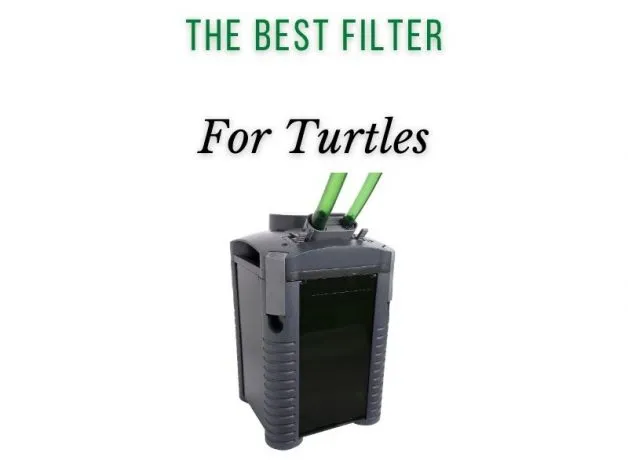
The best turtle-tank filter is one that handles your actual water volume and waste load, provides usable biological media, and is easy enough for you to maintain consistently. For a larger aquatic setup, I would start by comparing external canisters. For a shallow or small setup, installation limits and safe flow can matter more than the biggest number on the box.
I’m TurtleHolic. I’ve used Fluval canister filters, and I used a SunSun 302 for years without problems. Those are my documented experiences. The current-model comparison below uses manufacturer specifications; I have not run a controlled side-by-side test of these three models.
Three filters worth comparing
Specifications checked November 3, 2026. Aquarium-capacity ratings are manufacturer labels, not a promise that a filter will support every turtle in a tank of that size.
| Model | Manufacturer capacity label | Published flow | Decision to check |
|---|---|---|---|
| Fluval 407 | 50–100 U.S. gallons | 383 U.S. GPH pump output; 245 U.S. GPH filter circulation, 120 V / 60 Hz | Whether its capacity and maintenance access fit your water volume and waste load |
| Fluval FX6 | Up to 400 U.S. gallons | 925 U.S. GPH pump output; 563 U.S. GPH filter circulation, 120 V / 60 Hz | Cabinet space, safe outlet flow and whether you need this much filter |
| Zoo Med Turtle Clean 50 (TC-50) | Turtle habitats up to 50 gallons | 200 GPH listed; not identified as an equivalent loaded filter-circulation measurement | The required position of the filter relative to the waterline |
My practical shortlist would be the 407 for a setup where its published capacity and footprint fit, the FX6 for a larger system with room for it, and the TC-50 where a smaller turtle-specific canister and its installation requirements fit. These are starting points for comparison, not three universally correct tank-size assignments.
The tradeoff with a larger canister is physical size and the work involved in servicing it. For example, the FX6 is roughly 15.75 × 15.75 × 20.8 inches, while the 407 is about 9.5 × 7 × 19.3 inches. Leave additional room to disconnect hoses and lift the head; measuring only the closed filter can lead to an awkward installation.
Canister, internal or hang-on-back?
| Filter type | Why consider it? | What to inspect before buying |
|---|---|---|
| External canister | Keeps most of the equipment outside the habitat and can offer several media stages | Hose routing, waterline requirements, seals, priming, cabinet access and replacement parts |
| Internal filter | A compact installation without a separate canister beneath the tank | Minimum water depth, accessible media, protected intake and space taken from the animal |
| Hang-on-back filter | Easy access from above on a compatible tank | Whether it can draw from your lower turtle-tank waterline and restart correctly |
| Undergravel system | Uses a substrate bed as part of filtration | Suitability of that substrate for your turtle and how you will remove trapped waste; it is not a simple replacement for routine cleaning |
Read the exact model’s installation instructions before deciding. Zoo Med specifies that the TC-50 motor head must be level with or below the tank’s waterline. A canister that looks ideal on paper can be the wrong choice if the tank sits on the floor and you cannot meet its installation requirements. See Zoo Med’s installation FAQ.
Pump output is not the same as filtration in your tank
A 75-gallon tank may not contain 75 gallons of water, particularly when space is left for a basking area. Work out the filled volume first. For a rectangular tank, approximate U.S. gallons as inside length × width × water depth in inches, divided by 231, before allowing for displacement.
For example, 48 × 18 × 12 inches of water is about 44.9 gallons before décor displacement. That is the water-volume input for comparing equipment; it does not establish that the enclosure itself is large enough for the turtle.
The 407’s published circulation figure divided by 44.9 gallons is about 5.5 turnovers per hour. This is a calculation from the specification—not measured flow through that example tank, and not a claim that 5.5 is the correct target for every species. Hose runs, media condition and the installation affect the result. Fluval’s canister maintenance guidance explains why hoses and maintenance matter.
Do not solve every problem by adding stronger current. A turtle should be able to rest, reach the surface and move around without fighting the outlet. Check intake protection and follow the manufacturer’s rules for adjusting flow. Water tests and the animal’s use of the habitat tell you more than a capacity sticker alone.
What each filter stage does
Mechanical media catches suspended debris. It still needs cleaning: collecting waste inside a filter is not the same as removing that waste from the system.
Biological media provides surfaces for microbes that process ammonia and nitrite. A new filter needs time to establish that population. Clear-looking water does not prove the process is working; use water tests. This is aquarium biology, described in OATA’s guide to maturing a freshwater filter.
Chemical media serves a specific purpose depending on the material. Ordinary activated carbon is not a substitute for establishing biological filtration, testing water or changing water. Avoid buying a stack of additives before identifying the problem you are trying to solve.
Compare the cost of owning the filter
Before choosing, make a short list for each model: purchase price, included media, replacement sponges and seals, impeller availability, warranty terms in your country, electricity and the space needed for servicing. A low purchase price is less appealing if a small broken part means replacing the whole unit.
Fluval lists the 407 at 23 watts for the U.S. electrical specification and the FX6 at 43 watts. At an illustrative $0.20 per kWh, continuous operation for 30 days works out to about $3.31 and $6.19 respectively. Actual consumption and your local rate can differ. Our ownership-cost guide shows the calculation for the rest of the setup.
Where my SunSun experience fits
I used the SunSun 302 for years without problems. That is useful experience with that model, but it does not tell me how every current SunSun model compares with a 407 or FX6. Before choosing a newer model, check its current manual, parts support and installation requirements rather than transferring my old experience to the whole range.
Penn-Plax and Eheim are also brands readers may encounter. I would compare an exact model using the same checklist; a brand name alone is not enough to rank it above or below the options here.
Choose a filter you will actually clean
Make maintenance practical from the beginning. Can you reach the valves? Where will the canister drain? Can you remove the media baskets without spilling across electrical equipment? Keep the manual nearby and disconnect equipment as directed before servicing it.
Preserve established biological media during ordinary maintenance rather than sterilizing everything at once. Follow the model’s instructions for rinsing and replacement, then check for leaks and confirm circulation after restarting. Use our step-by-step tank-cleaning guide and maintenance schedule to connect filter care with the rest of the tank.
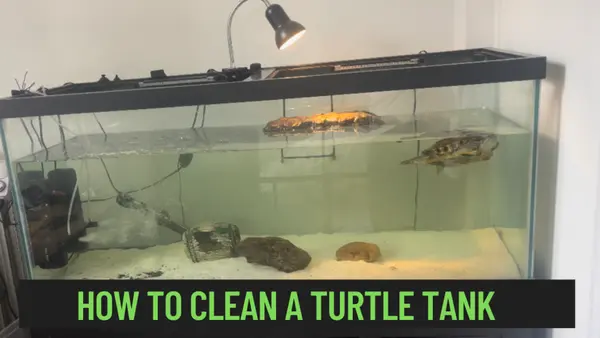
Watch my filter-cleaning video. The written checklist here adds the checks to keep in mind: protect the biological media, restart correctly and inspect for leaks. Always follow your own model’s instructions.
Common filter questions
Does an aquatic turtle need a filter?
For a normal indoor aquatic-turtle aquarium, include filtration in the setup plan. It helps manage waste, but it does not eliminate water changes, testing or cleaning. VCA’s aquatic-turtle housing guide also describes filtration as helping between water changes. This advice concerns aquatic habitats; a terrestrial box turtle’s shallow drinking dish is a different arrangement.
Can a powerful filter fix cloudy water?
Not without knowing why the water is cloudy. Check test results, recent cleaning, feeding and whether the filter is newly installed or established before replacing it. My cloudy-water video and the cloudy-tank guide provide a starting point for that investigation.
My buying checklist
Measure the filled water volume and the available cabinet space, read the installation requirements, compare circulation and service costs, and check that the turtle can use the habitat safely. Those details are more useful than declaring one filter the winner for every tank.