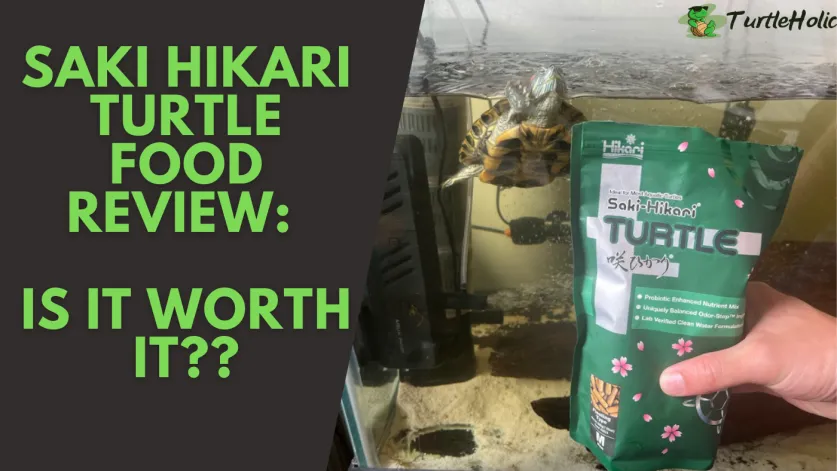
My turtle readily ate Saki-Hikari Turtle sticks, and they placed second for food preference in my eight-food comparison. That is the main reason they stood out to me. I would not buy them expecting a cure for cloudy water: I did not notice a water-clarity improvement in my tank.
This review draws on my original feeding observations and video, first published with the article in 2023. The product information below was checked in November 2026; that check is not a new feeding trial.
My verdict: worth considering, with a few limits
| What matters | What I can say |
|---|---|
| Acceptance | My turtle ate the sticks readily. They finished second in my eight-food preference comparison; another turtle may prefer something else. |
| Mess during feeding | I found that the sticks floated without quickly becoming soggy. The original review has no timed breakdown results. |
| Clearer water | I did not see a noticeable improvement. My water was already fairly clear. |
| Best reason to try it | You want a floating aquatic-turtle food and can check whether the stick size and diet fit your turtle. |
| Reason to look elsewhere | Your turtle needs a different food size or diet, or the price per unit is poor compared with suitable alternatives. |
What happened when I fed it
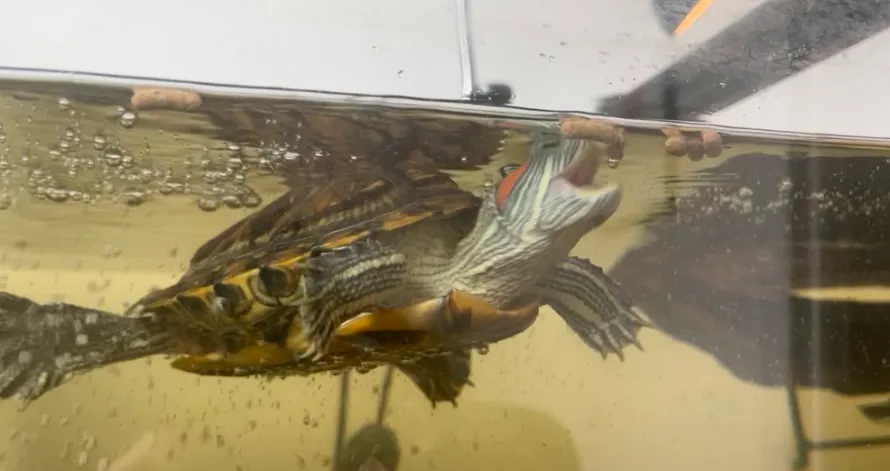
The sticks had a shrimp-like smell, a plain brown color, and a texture that did not seem overly hard to me. My turtle went straight for them. I had also noticed hesitation with some differently colored pellets, although that does not tell me whether color, smell, or something else explained the preference.
In the video below, I compare eight turtle foods. Saki-Hikari came second for preference in that comparison. Watch the feeding responses rather than treating the order as a universal list of the healthiest foods.
Watch my eight-food turtle-pellet comparison ↗
What this test does not establish: it was an informal comparison involving my turtle, not a controlled study across species. The published review has no measurements of long-term growth, digestive health, nutrient absorption, or changes in water chemistry. It also does not establish a test duration, so I cannot turn this into a long-term performance claim.
Does Saki-Hikari keep the water cleaner?
During feeding, I liked that the sticks stayed afloat rather than immediately falling apart. Uneaten food still needs removing; floating does not make leftovers harmless.
Hikari markets the food’s probiotic ingredient and odor-reduction benefits. Those are manufacturer claims. My feeding comparison did not test them.
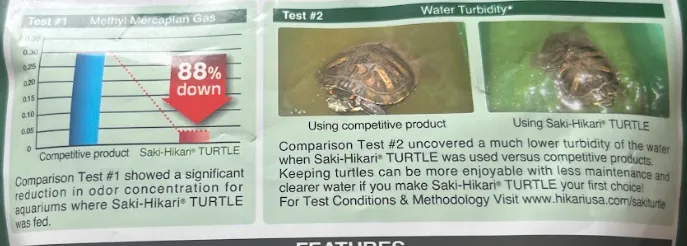
I did not notice clearer water after using the food. Because my tank was already fairly clear, that observation has limits too: it does not prove the product cannot help in another setup. It simply means I cannot promise a water-quality benefit from my own experience.
If odor or cloudy water is the reason you are shopping, check the feeding routine, waste buildup, filtration, and water tests first. My tank-cleaning guide and filter guide cover those jobs. A food change does not replace them.
Product details and diet suitability
The following figures are from Hikari’s US product page, checked November 16, 2026. They are label specifications, not my laboratory measurements. Check your own package because formulas and regional products can differ.
| Specification | Manufacturer listing |
|---|---|
| Food format | Floating sticks, approximately 12–14 mm |
| Crude protein | 41% minimum |
| Crude fat | 4% minimum |
| Crude fiber | 2% maximum |
| Calcium | 2% minimum |
| Listed bag sizes | 45 g, 200 g, and 567 g |
See the manufacturer’s full ingredient list and guaranteed analysis.
A protein percentage alone cannot tell you whether a food fits your turtle’s whole diet. Species, age, size, and health matter. For red-eared sliders, for example, the balance of plant and animal foods changes as they mature. VCA’s veterinarian-authored feeding guidance discusses that variety and the role of commercial pellets. A claim about a product working best when fed exclusively should not replace a species-appropriate feeding plan.
Price: compare the bag you can actually buy
Prices vary by bag size, seller, and delivery charges. The prices from my original comparison are too old to rely on for a purchase today.
Compare the delivered price per 100 g: divide the total price by the bag’s weight in grams, then multiply by 100. Use the same calculation for other suitable foods. A larger bag may work out cheaper, but that is only useful if your turtle accepts it and you can use and store it according to the package directions.
If you are trying it for the first time, a small bag limits how much you have left if your turtle refuses it. My turtle’s enthusiasm is a reason to consider a trial, not a guarantee.
How much should you feed?
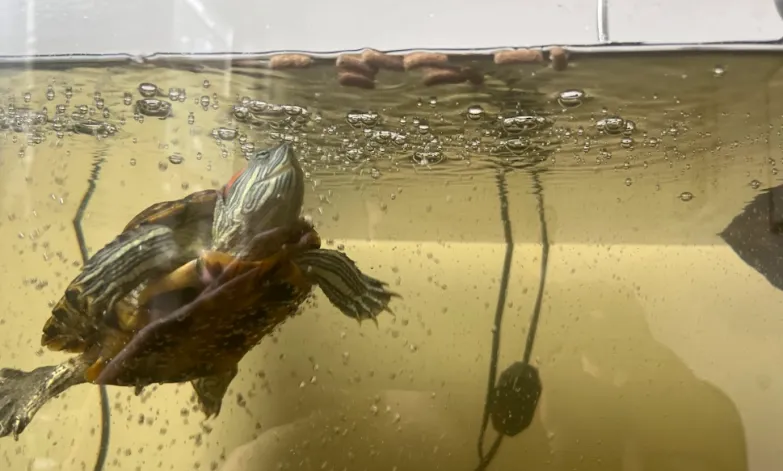
My original article mentioned giving 15–20 sticks at a feeding. Without a matching species, body size, age, and complete diet, that number is not a useful portion recommendation for your turtle.
Use a feeding plan appropriate to your turtle and the food’s size and energy content. Age and size also affect feeding frequency, as VCA explains. If you are unsure, ask a reptile veterinarian to help with the amount and schedule. The TurtleHolic feeding guide explains the information to gather first.
Other foods from my comparison
For more of my observations, read the ReptoMin review and Mazuri review. Compare acceptance, pellet format, the current label, and cost for your own situation. Those are more useful choices than assuming the food my turtle ate first must be best for every turtle.
For me, Saki-Hikari’s strongest point was straightforward: my turtle liked eating it, and I liked how the sticks behaved during feeding. The water-clarity claim remains something I did not verify.