Turtles can learn routines and respond to familiar cues, but that isn't the same as proving they feel attachment to an owner in the way a person or dog might. A turtle swimming over when you enter the room can be a lovely part of keeping one. We just need to be careful about what we say it means.
Here's something I shared in the original version of this article: my turtle still hissed when I tried to pick it up. That detail is more useful than a checklist of “signs your turtle loves you.” Being the person who feeds an animal doesn't mean it welcomes every kind of interaction.
Can your turtle recognize you?
It may respond differently to familiar people or routines. But in a home aquarium, several cues can arrive together: a person approaching, movement near the food container, a particular time of day, or the sight of food. Watching your turtle respond doesn't tell you which cue it is using.
There is good evidence that chelonians can learn. In a 2019 study of giant tortoises, animals learned food-rewarded tasks. Three Aldabra tortoises tested nine years later retained the initial tasks. The research team's explanation describes what was tested.
That's fascinating evidence of learning and memory. It wasn't a test of affection toward owners, and giant tortoises aren't interchangeable with every pet aquatic turtle. I wouldn't use it to claim that a slider loves its keeper or knows a person's voice from another room.
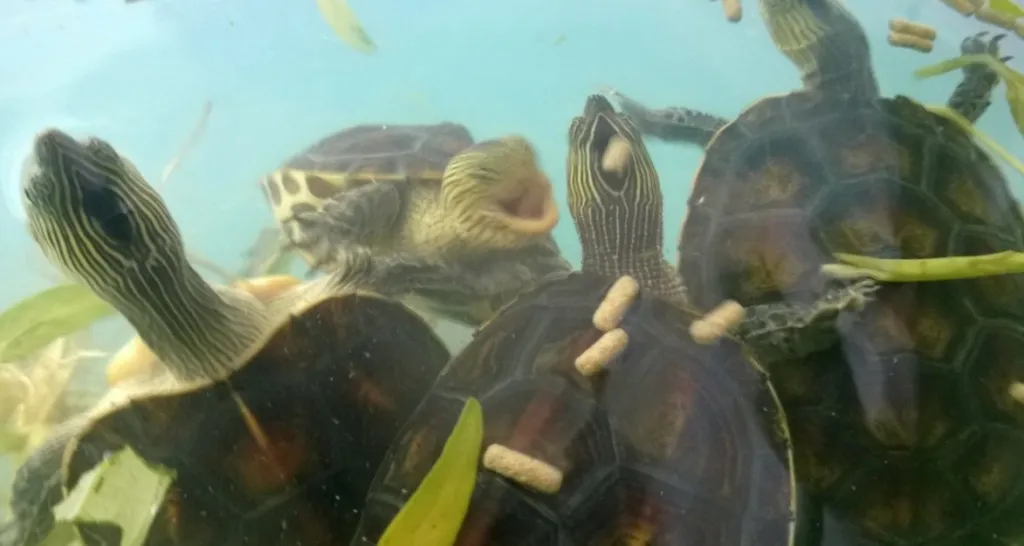
What does swimming toward you mean?
Context helps. If the response happens around feeding time, anticipation of a meal is a reasonable explanation. If it happens at other times, there may be other familiar cues involved. Neither observation gives us direct access to the turtle's emotions.
| What you notice | What you can reasonably say | What you can't conclude from that alone |
|---|---|---|
| Swimming to the front when you approach | The turtle responds to your approach or something associated with it. | That it needs more food or is expressing love. |
| Watching your movements | It is responding to something in its surroundings. | That it feels gratitude. |
| Moving away when you reach into the enclosure | This interaction causes it to retreat. | That you have failed as an owner. |
| Remaining still while being touched | It has not moved away. | That it enjoys petting. |
For a useful record, jot down what happened before the behavior and what the turtle actually did. “Swam toward the feeding corner when I opened the container” tells you more than “was happy.” There is no need to provoke a reaction or stage a choice between family members.
How I would build a comfortable routine
Focus on care you can control: a suitable enclosure, a consistent feeding routine, and calm movements around the tank. Give your turtle opportunities to retreat instead of repeatedly drawing it out for attention.
The RSPCA's slider guidance distinguishes necessary handling for care from petting. It also describes enrichment through a suitable environment. That is a better starting point than daily cuddling or letting a turtle roam around the house.
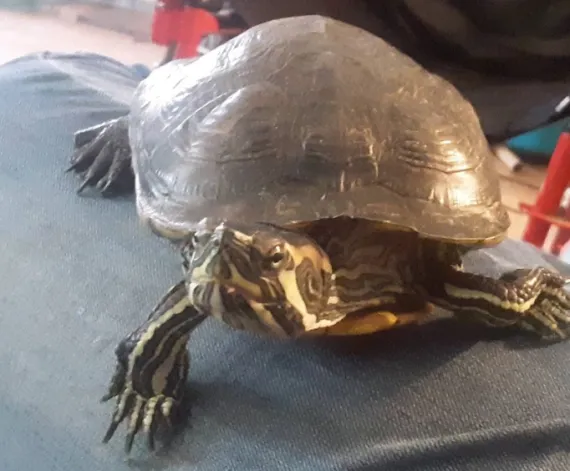
You don't need extra treats to make the relationship count. Repeated feeding every time you pass the aquarium makes it harder to keep track of the day's food. Enjoy watching your turtle without turning every interaction into another meal.
What if your turtle hides or seems uninterested?
Give it time and space, especially after a move or a change to its enclosure. Compare its behavior with its own usual routine rather than with a particularly outgoing turtle on YouTube.
A new loss of appetite, unusual inactivity, or an injury deserves a care and health check. Don't explain those changes away as your turtle being moody or not liking you. A reptile veterinarian can assess concerns that an article or video can't resolve.
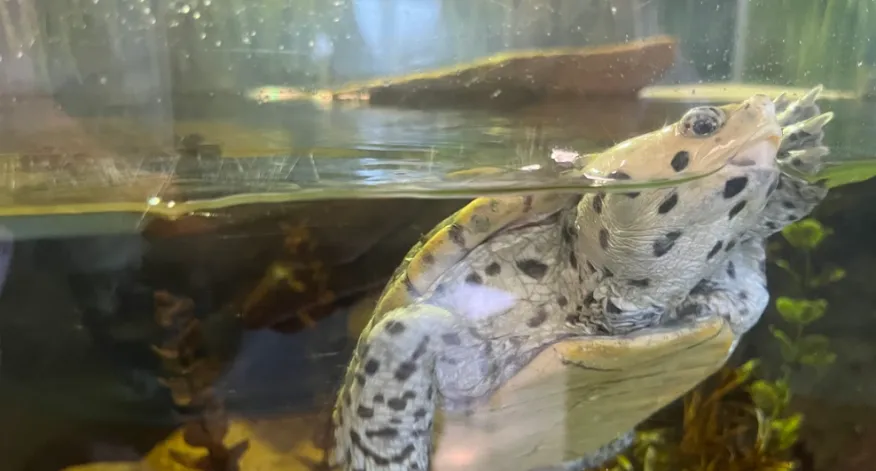
A relationship worth enjoying on its own terms
I don't think a turtle needs to act like a dog to be an interesting companion. Noticing its habits, giving it a good home, and seeing it use the habitat you've built are worthwhile parts of keeping one.
For more of the person behind these guides, meet the TurtleHolic. You can also watch the video linked in my original article. Treat behavior on camera as an observation, not a test that proves what an animal feels.