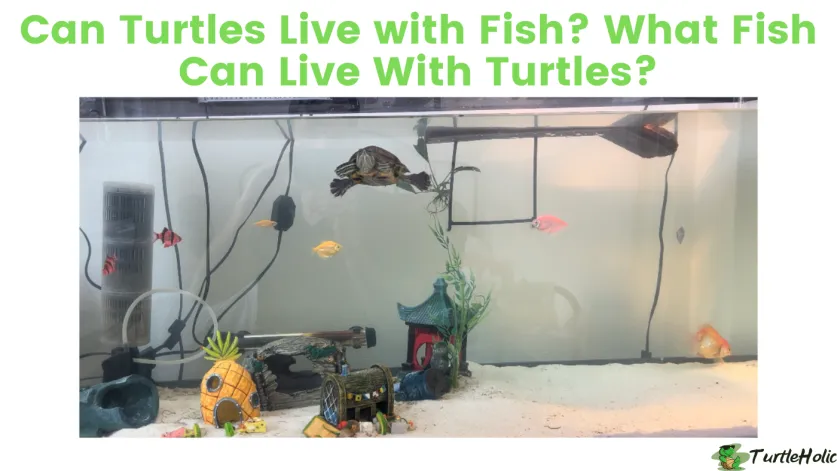
Turtles and fish sometimes live together for a while, but there is no reliably safe fish tankmate for a pet turtle. For a home aquarium, my recommendation is to keep them separately. A fish surviving the first week—or even a few months—doesn't mean the arrangement will last.
I have tried keeping fish with my turtle. Some of those attempts looked promising, which is why my earlier advice was more optimistic. But one experience in particular deserves more weight than a list of supposedly “turtle-safe” fish.
What happened in my own tank
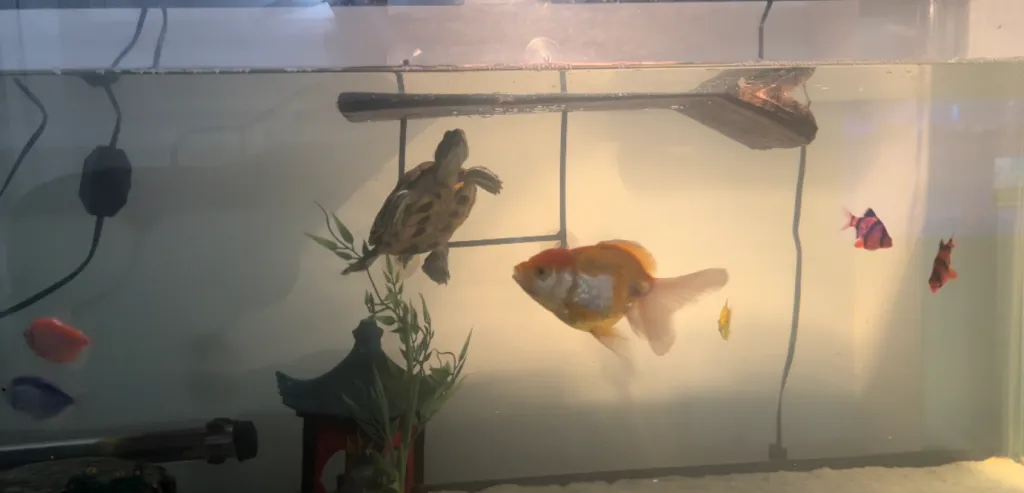
I kept a large goldfish with my turtle for a couple of months. They appeared to coexist peacefully. Then the goldfish died, and my turtle ate it. I couldn't tell whether the fish died first or whether the turtle caught it. I still can't give you that answer.
In the original version of this guide, I also described having good luck with tiger barbs “so far.” That was an observation about my tank at that point, not a long-term compatibility test. It shouldn't have become a promise that a fast fish could always escape.
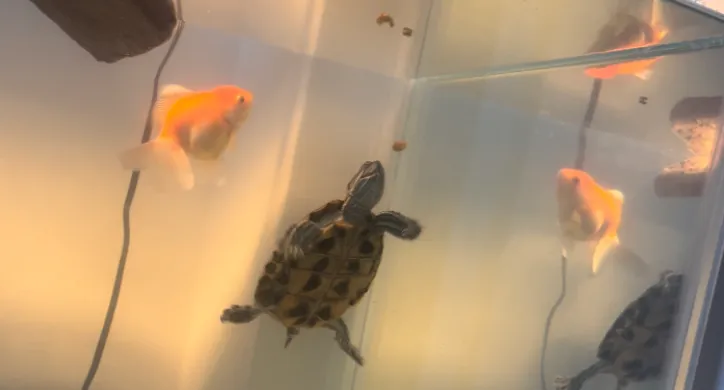
You can watch my earlier turtle-and-fish video for the background to this guide. The recommendation here is more cautious: a successful-looking setup is not evidence that another animal should be added to yours.
Why I recommend separate tanks
The RSPCA's slider care sheet advises against keeping sliders with live fish because of killing, chasing, and stress. OATA's freshwater turtle guidance also recommends keeping turtles apart from fish.
That distinction matters: the question isn't just whether a fish fits in the tank or can outswim a turtle during a video. It's whether both animals can feed, rest, and use their space without an ongoing threat. For me, a fish that has to keep escaping isn't a good tankmate.
What about danios, guppies, barbs, plecos, and cichlids?
These were the five groups in my original list. I no longer recommend any of them as a safe solution. Here's how I would think about the claims you'll often see attached to them.
| Fish | Common claim | Why it doesn't settle the question |
|---|---|---|
| Zebrafish / danios | “They're fast.” | Swimming speed is not a guarantee of safety in a confined aquarium. |
| Guppies, mollies, and platies | “They reproduce quickly.” | Replacing fish that disappear doesn't make the arrangement suitable for the fish. |
| Tiger barbs | “They worked in someone else's tank.” | My own short-term experience cannot predict what another turtle will do. |
| Plecos | “They're too big and will clean the tank.” | Size doesn't establish compatibility. A pleco is another animal to feed and care for, not a substitute for maintenance. |
| Cichlids | “They can defend themselves.” | A possible fight is a reason to avoid a pairing, not evidence that it will work. |
Names such as “pleco” and “cichlid” cover many species. Before buying any fish for its own aquarium, check the exact species, adult size, diet, water requirements, and social needs. Don't choose a fish only because someone calls it hardy.
Fish pictured in the original guide
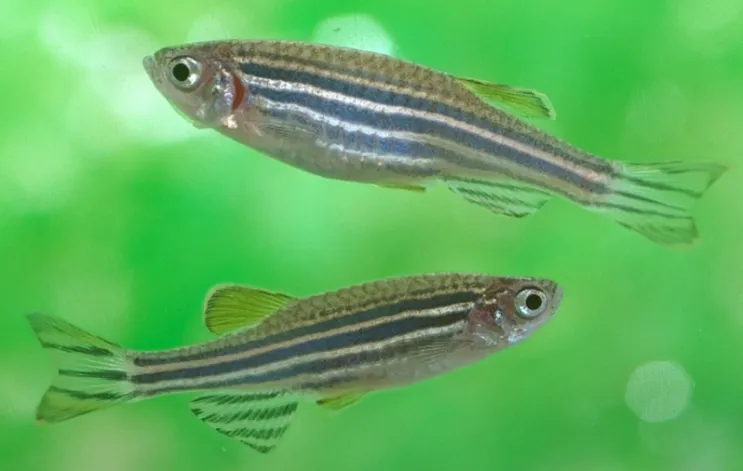
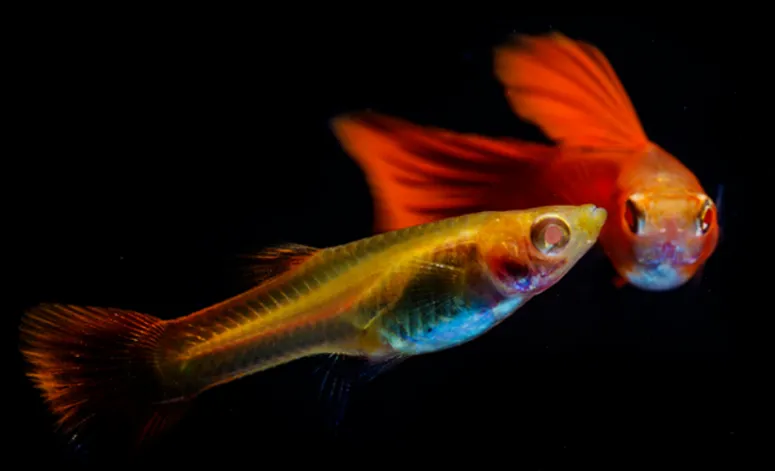
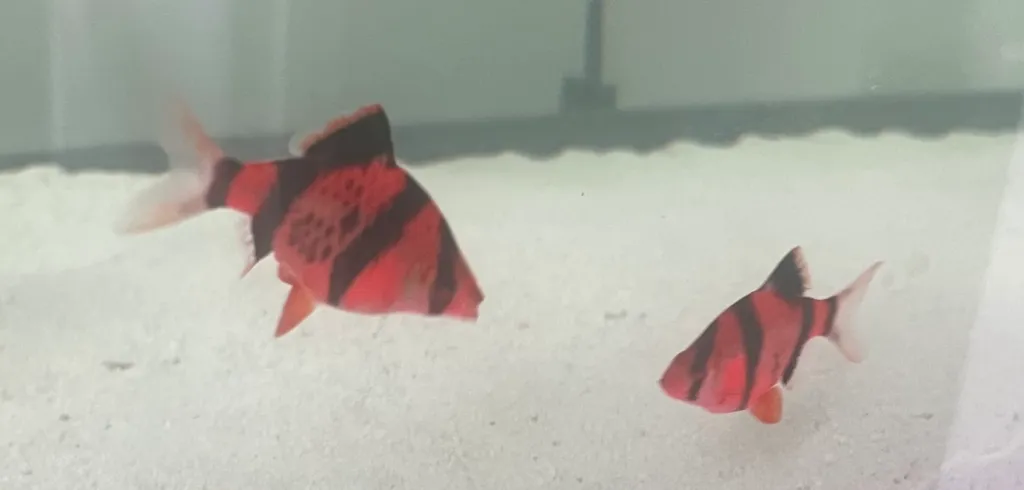
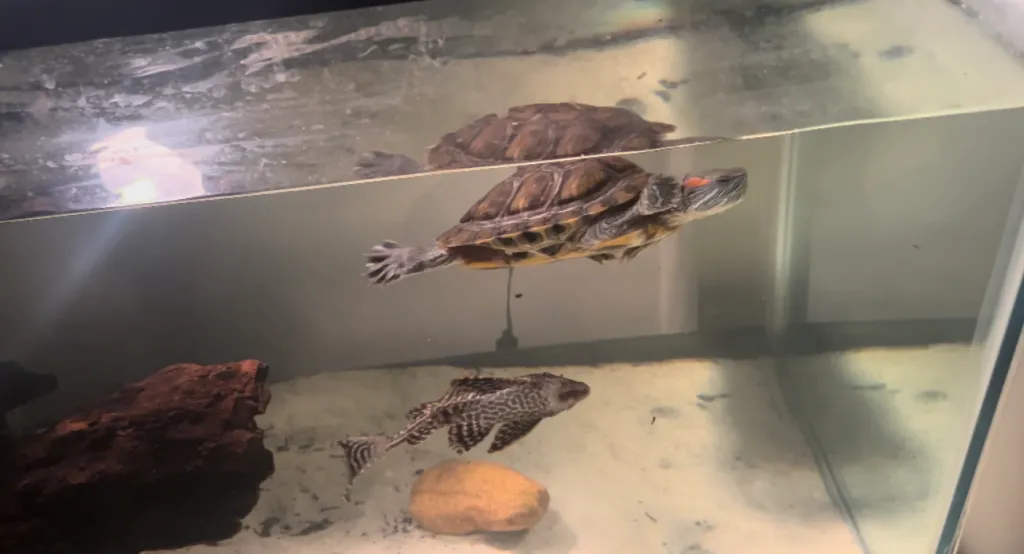
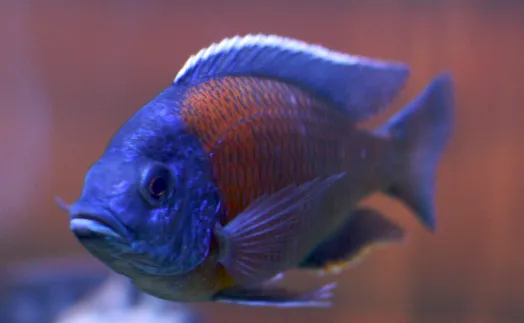
These photos identify the fish discussed above; they are not a recommended shopping list.
If your turtle and fish already share a tank
Plan suitable separate housing. If there's chasing, biting, injury, or a fish unable to feed, separate them promptly and seek appropriate veterinary advice for injured animals. A fish bowl or an unprepared container isn't a permanent solution.
Write down each species and its adult housing requirements before buying the replacement enclosure. Check that its filtration is established and that its temperature and water conditions suit the animal moving into it. OATA recommends testing water regularly; clear-looking water alone doesn't tell you whether ammonia or nitrite is present.
Adding decorations or a stronger filter does not remove predation risk. Cover and filtration serve different purposes from separation. Likewise, feeding your turtle extra meals is not a dependable way to protect fish. Use a suitable turtle feeding routine instead.
Can you still make a turtle-only tank interesting?
Absolutely. Start with swimming space, a usable basking area, and secure cover suited to your turtle. For ideas, explore the tank planner; check the actual dimensions and suitability of anything you buy. The planner is a way to organize a setup, not proof that a stocking combination is safe.
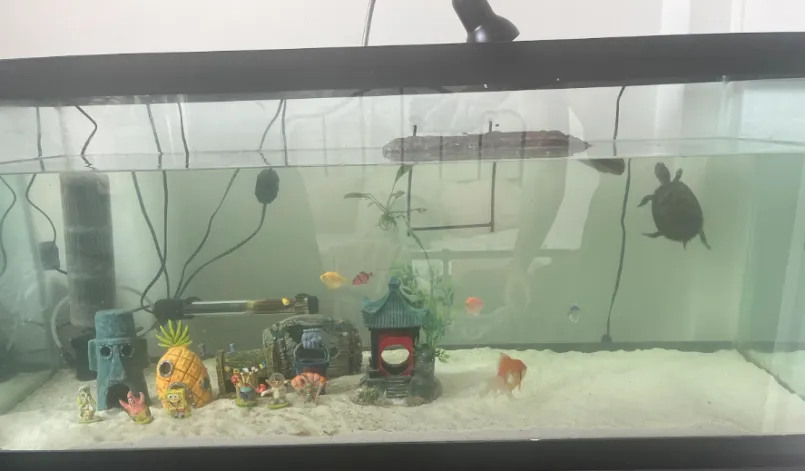
I understand the appeal of a lively mixed aquarium. I've tried it myself. But the lesson I want you to take from my experience is that “it hasn't gone wrong yet” is a poor basis for choosing a permanent home for an animal.