Java fern, Anubias, and rosette sword are plants I have tried in a turtle tank, but the best choice depends on how you will anchor it and what your turtle does to it. My red-eared slider left the rosette sword alone while nibbling other plants. That is an observation from my tank, not a promise that yours will do the same.
I like the look of a planted aquarium, but a turtle can make an expensive arrangement a short-lived experiment. Start with a small number of correctly identified plants, check their suitability for your turtle, and leave room to swim and reach the basking area.
Watch the plants I tried
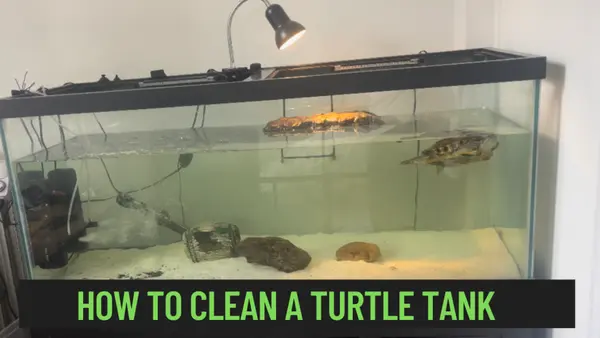
My five-plant turtle-tank trial includes java fern, Anubias, rosette sword, Amazon sword, and a plant sold as El Niño fern. The video lets you see the plants and setup rather than relying only on a product description.
This is a keeper’s trial, not a controlled feeding-safety study or a measured long-term comparison. I would not use a turtle leaving one plant alone as proof that the plant is safe to eat.
Compare the planting choices
| Plant | How it fits a layout | Main check before buying |
|---|---|---|
| Java fern (Microsorum) | A rhizome plant that can be attached to hardscape, so a full planted substrate is not essential. | Keep the rhizome exposed and make the attachment secure. |
| Anubias | Another rhizome option for wood or rock. I have kept it in my slider tank. | Check the exact variety and mature size; do not bury its rhizome. |
| Rosette sword (Echinodorus) | A rooted planting option. My turtle left this one alone in the experience described here. | Confirm the plant identity, growing needs, and room for roots. |
| Moss on wood | An option for a planted hardscape feature; I have made a moss-and-driftwood arrangement. | Watch for loose material and inspect the attachment. |
Tropica’s planting guide distinguishes rhizome plants from rooted rosettes and mosses. It supports the planting methods here; it is not a certification that a plant is suitable turtle food.
Java fern: useful when you do not want a planted floor
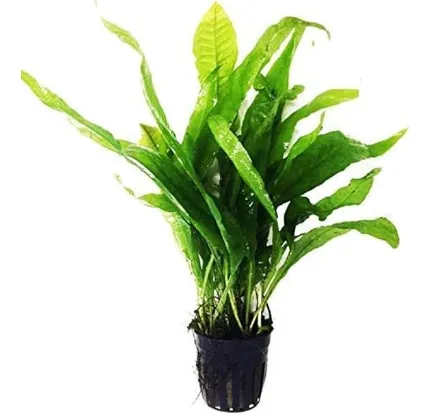
The useful feature of java fern is where it can grow. Attach it to suitable wood or rock instead of burying the thick horizontal rhizome. Roots and rhizomes are not the same part of the plant; keeping the rhizome uncovered matters.
For a turtle aquarium, think about the whole attachment. Can the turtle push the rock over? Could it catch a foot in loose line? Can you remove the plant to clean around it? A simple, stable placement is more practical than an elaborate arrangement you cannot maintain.
I would start with one piece of planted hardscape and watch what happens before filling the tank. Choose the exact variety from its label rather than assuming every java fern will have the same final size.
Anubias: one I have kept with my slider
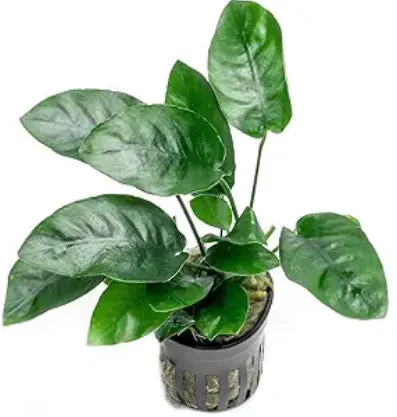
I have kept Anubias in my red-eared slider tank. Like java fern, it gives you an option that does not depend on burying the plant across the tank floor. Keep the rhizome exposed and follow the grower’s instructions for the variety you buy.
The limitation is that keeping a plant alive and keeping it intact are different challenges. A turtle may pull at a well-grown plant or dislodge its support. Check both the plant and the attachment during normal maintenance, and move it if it obstructs a route the turtle uses.
Rosette sword: the one my turtle left alone
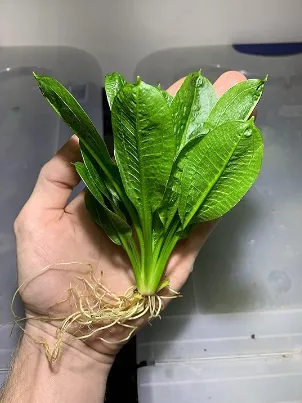
My turtle usually nibbled at other plants but stayed away from the rosette sword. That made it an interesting option in my setup. I cannot turn that into a rule that turtles dislike its taste or will never eat it.
A sword plant has a different planting plan from an attached fern. Check the grower’s guidance for its roots, light, nutrition, and eventual size. If your turtle regularly digs up rooted plants, weigh that work before buying several. An attractive display in a shop does not show what happens after a turtle explores it.
My moss-and-driftwood project
I also used moss on driftwood to make a tree-like feature. You can see that project in my video. It is a design idea to adapt to the space you have, not a reason to make the aquarium difficult to navigate.
Leave clear swimming paths and inspect loose material during cleaning. If a feature continually comes apart or collects inaccessible waste, simplify it. The turtle’s access and your ability to maintain the aquarium come before the shape of the arrangement.
“Aquarium plant” does not automatically mean “turtle food”
Turtles have different diets across species and life stages; they are not all herbivores. Do not use this decorative-plant list as a feeding plan. For routine aquatic-turtle meals, see the feeding guide.
Before introducing a plant, get its scientific name and check its suitability for the species you keep, including whether it may be eaten. Ask the supplier about treatments and preparation. A vague common name or a seller’s “pet safe” badge is not enough information for every animal.
Avoid unidentified garden clippings and plants collected from unknown or treated areas. Remove packing materials as instructed and inspect for loose weights, ties, and damaged leaves. If you cannot establish that a plant is appropriate, leave it out while you seek knowledgeable advice.
What plants will—and will not—do for maintenance
Plants can add visual interest and structure, but I would not buy them as a replacement for a filter or a water-change routine. Test water and remove decaying leaves and uneaten fragments. A planted tank can still have algae, dirty water, or an unsuitable layout.
Keep a simple record: plant name, date added, location, attachment, and whether your turtle nibbles, uproots, or ignores it. Photos from the same angle make it easier to see what survived. Change one part of the layout at a time so you can work out what caused a problem.
Would artificial plants be easier?
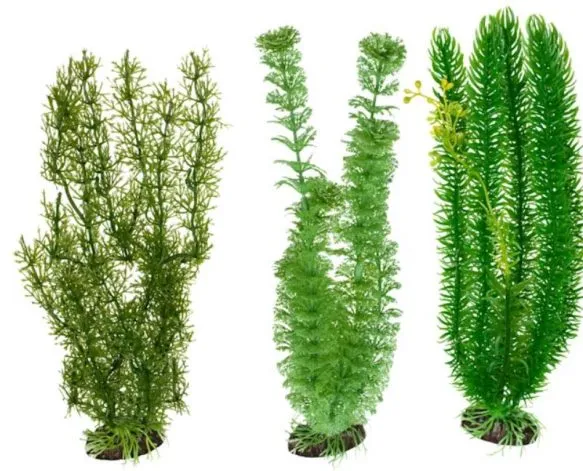
Artificial plants remove the growing requirements, but they still need cleaning and inspection. Look for stable aquarium-suitable pieces without sharp edges, loose parts, or entangling loops. If your turtle bites pieces off, remove the item. “Artificial” is not a guarantee that it is safe in every setup.
My starting point would be one manageable feature with room around it, then observation. For the rest of the habitat, use the lighting guide and the maintenance schedule alongside the plant layout.