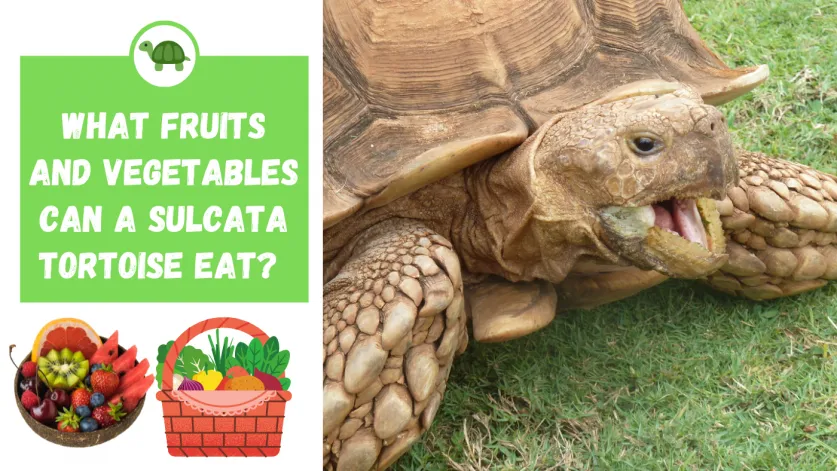
A sulcata's menu should be built around grasses and suitable grass hay, with varied edible leaves and other appropriate plants alongside them. Fruit is not something I recommend adding to its regular diet. If you're standing in the produce aisle wondering what to buy, start with leafy foods—not a fruit bowl.
My earlier guide put too much emphasis on fruit treats. The more useful question is what the rest of the diet looks like. A list of individual foods can sound reassuring while missing the biggest issue: a sulcata is a grazing tortoise, and a bowl of supermarket produce isn't a substitute for that kind of diet.
Start with grass and hay
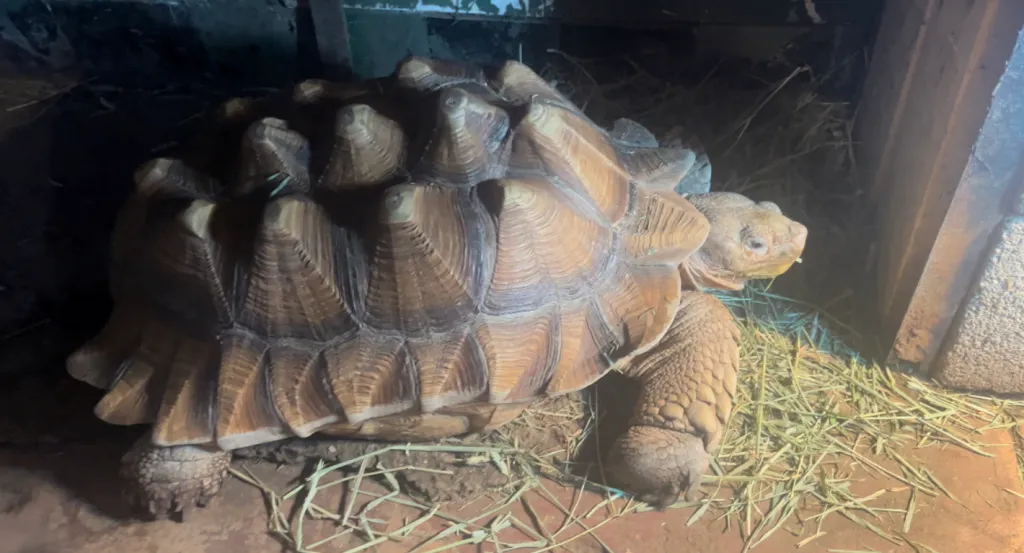
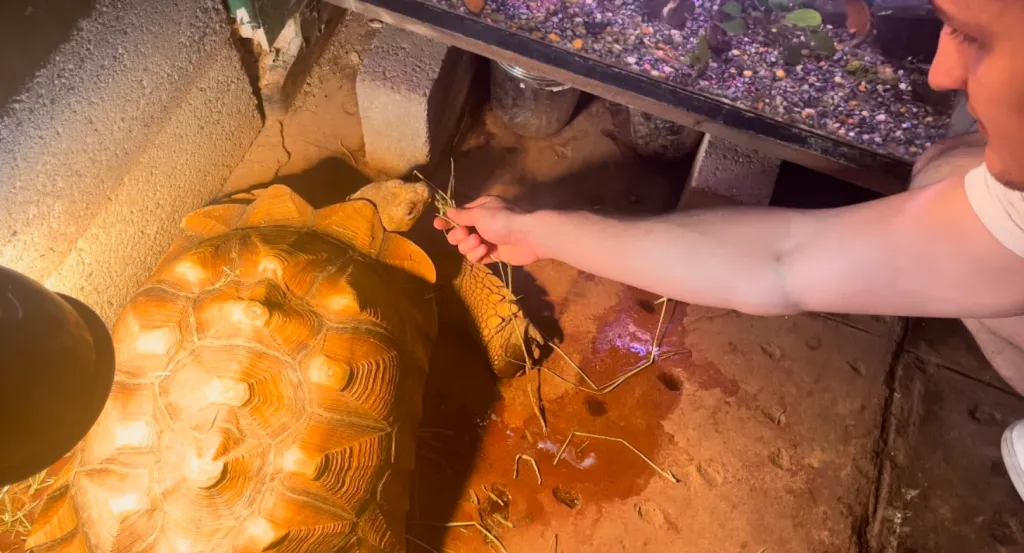
The Tortoise Protection Group's sulcata care sheet describes a grass-and-hay foundation, with other suitable plants providing variety. It lists timothy, orchard, and meadow hay as options when fresh grass is unavailable. Choose clean material intended for feeding, free of mold and chemical contamination.
For shopping purposes, that means checking your grass or hay supply before choosing salad additions. If your sulcata is very young, won't eat its usual foods, or has an existing health problem, ask a reptile veterinarian to tailor the diet and food preparation. Don't try to force a reluctant animal onto a new diet by withholding everything it will eat.
Which greens and other plants can you offer?
Think of these as ways to add variety, not a complete meal plan. Identify garden plants correctly and check which part is suitable before feeding. A common name on its own can refer to more than one plant.
| Food or group | How to use it |
|---|---|
| Suitable grasses and grass hay | The foundation. Maintain a reliable supply rather than replacing it with lettuce. |
| Dandelion leaves and plantain leaves | Include correctly identified, untreated plants among a varied selection. Plantain here means the leafy Plantago plant, not the banana-like fruit. |
| Endive, escarole, and radicchio | Supermarket greens that can contribute variety alongside the main forage. |
| Romaine lettuce | An addition to a mixed diet, not the whole menu. |
| Hibiscus leaves and flowers | A plant option when its identity and chemical-free growing history are known. |
| Cucumber | Not a replacement for forage or drinking water; don't build the diet around it. |
These examples draw on the sulcata care sheet above and The Tortoise Table's plant database. Its “feed in moderation” entries are a reminder to rotate suitable plants, not make one favorite the entire diet.
Can a sulcata eat strawberries, banana, apple, or melon?
I would leave them off the regular menu. Being willing to eat something doesn't tell us that it belongs in a sulcata's diet. The Tortoise Table's diet guidance recommends against deliberately feeding fruit to grazing species and explains how they differ from fruit-eating rainforest tortoises.
That distinction also applies to packaged fruit treats. A product labeled “for tortoises” still needs to suit your species. You don't need to buy a sweet treat to add interest to feeding; suitable forage gives you plenty of choices.
What should you leave out?
Don't offer meat, dog or cat food, or unidentified plants. Avoid food gathered from areas treated with pesticides, weedkillers, or other chemicals. Washing a leaf does not establish that a sprayed plant is safe.
Keep feeding supplies simple: recognizable ingredients, a known source, and food suited to a grazing tortoise. For a specific plant, use the database entry rather than assuming that all vegetables—or all flowers—are interchangeable. If you can't confidently identify a plant, leave it out.
Water, supplements, and a practical feeding check
Fresh drinking water should always be available. A sulcata's origins in a dry region are not a reason to restrict water. Food choices also don't replace appropriate lighting, temperature, or an individualized calcium and supplement plan.
At feeding time, take a minute to check:
- Is there suitable forage, rather than only salad?
- Are the leaves correctly identified, clean, and from an untreated source?
- Is clean water available in a dish the tortoise can safely enter and leave?
- Has old or spoiled food been removed?
- Is the tortoise eating normally for this individual?
If eating changes or you're unsure about growth and body condition, bring a food record and photos of the enclosure to a reptile veterinarian. They make the discussion much more useful than simply saying “it eats greens.”
Looking after a different species? Read the separate Hermann's tortoise food guide. Its leafy-forage emphasis differs from a sulcata's grass-based menu.