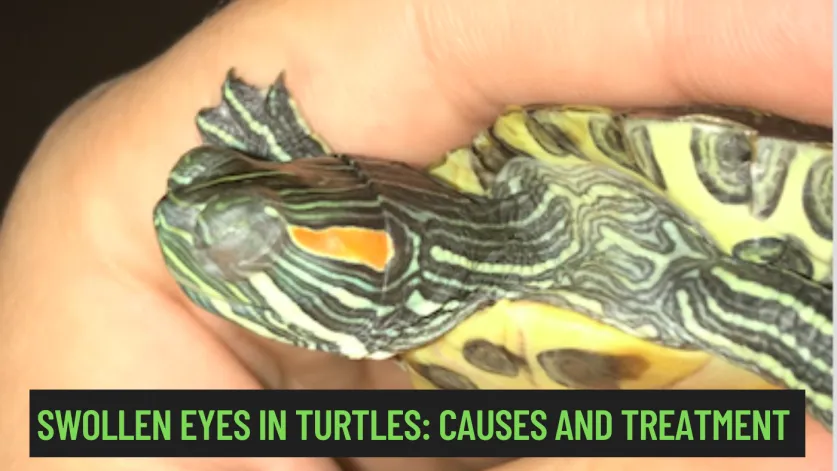
Swollen turtle eyes can have several causes, and they need a reptile veterinarian’s assessment rather than a trial of home remedies. Contact a clinic promptly if the swelling is new or persistent. Describe any discharge, injury, appetite change, or difficulty opening the eyes.
If swelling comes with gasping, pronounced weakness, or difficulty staying at the surface, seek urgent help. Eye appearance alone cannot tell you whether the problem is local to the eye or part of a wider illness.
What can cause swollen eyes?
A clinician may consider an injury, irritation, infection, or a nutritional problem among the possibilities. One swollen eye does not prove trauma, and two swollen eyes do not prove a vitamin deficiency. These patterns are useful observations, not a diagnosis.
Veterinary Vision Center explains that vitamin A deficiency can affect reptile eyes and is assessed using diet history and clinical signs. The important practical point is to bring an accurate diet record, not to start supplementing based on swelling alone.
A useful eye-observation checklist
| Record this | Be specific |
|---|---|
| Which eye is affected | Left, right, or both; whether the turtle can open them while awake. |
| Timing | First noticed, sudden or gradual, and any change since then. |
| Appearance | Swelling, discharge, redness, rubbing, or a visible injury—without touching the eye. |
| Other behavior | Last food eaten, activity, breathing, and swimming changes. |
| Recent changes | New bulb, new decoration, cleaning product, tankmate, food, or supplement. |
Take a photograph in normal light if you can do so without stressing the turtle. Do not hold the eyelids open to get a better picture. The clinic may find a photograph helpful for triage, but it does not replace examining the eye.
What to do while arranging care
Keep handling to a minimum and remove an obvious source of injury, such as an unstable sharp decoration. If another turtle is attacking it, separate them safely and tell the clinic what happened. Ask for housing instructions if the affected animal cannot navigate its enclosure normally.
Write down the species, water-test results, lamp model, lamp placement, and measured temperatures. Correct a confirmed equipment failure according to the equipment and species guidance; do not turn the enclosure unusually hot as an eye treatment. There is no single infection-treatment temperature that fits every turtle.
For an aquatic turtle, review routine water maintenance. For a box turtle or tortoise, bring details of its own enclosure instead of applying an aquatic-tank routine.
Why not try carrot soaks, vitamins, or eye drops first?
A carrot soak cannot establish the cause of swelling. Neither can improvement after a product identify what was wrong. Avoid using human eye drops, leftover medications, or multiple supplements without veterinary direction.
Vitamin A treatment requires care because excess can also cause harm; VCA advises veterinary supervision. Bring the labels of anything already given, including the amount and timing. Do not delay an appointment to work through several products in sequence.
Questions to ask at the appointment
- What is the suspected cause, and are tests needed to distinguish it from other causes?
- Does the diet need changing, and how should existing supplements be handled?
- How should I give any prescribed treatment and house the turtle during recovery?
- When should improvement be visible, and what should prompt an earlier call?
For a turtle that mainly keeps its eyes closed, see closed eyes versus ordinary sleep. If yours is a slider, the red-eared slider guide includes a tank-and-diet record to bring along.