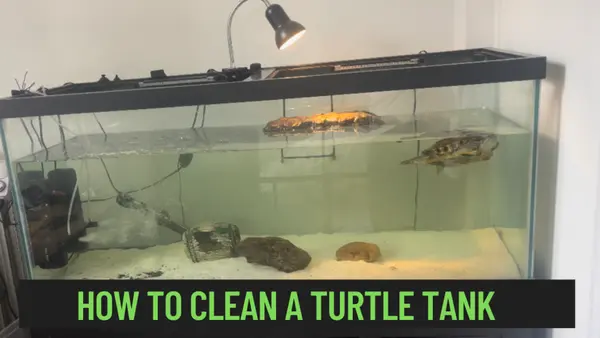
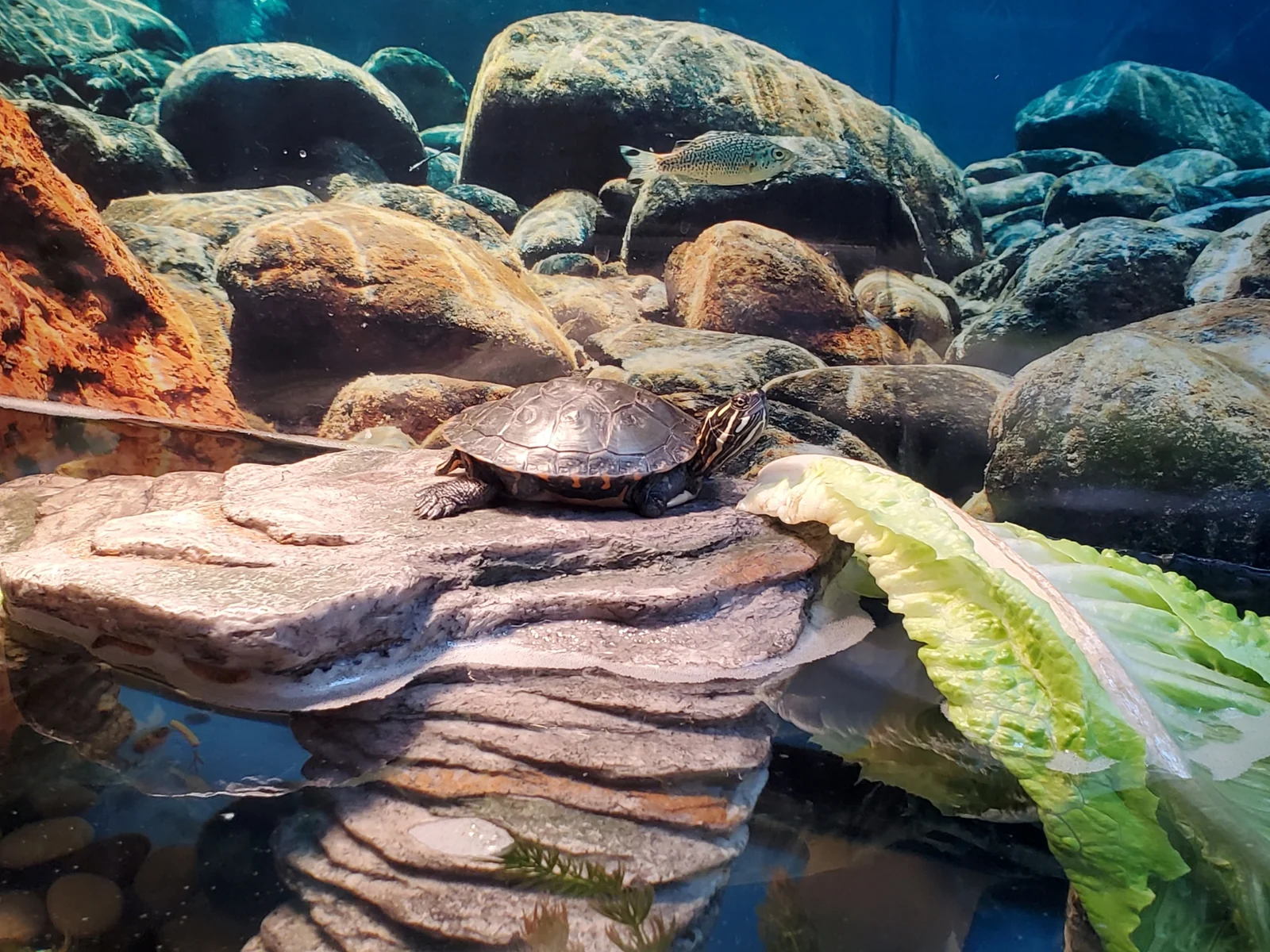
Cycling a turtle tank means establishing the biological filter that processes ammonia from waste. Running clear water through a new filter for a few days is not the same thing. You need a way to feed the developing filter and test whether it is doing the job before an animal depends on it.
The easiest time to deal with this is before the turtle comes home. If a turtle is already in the tank, go straight to the occupied-tank section below. Do not add cycling ammonia to water containing turtles, fish or other animals.
What happens during a cycle?
In a functioning biological filter, microorganisms convert ammonia to nitrite and then nitrate. Nitrate can still build up, so an established filter does not remove the need for water management. Oxygen, temperature and water chemistry affect the process. University of Florida IFAS explains the chemistry.
Think of the filter as doing several jobs. A sponge catching visible debris is doing mechanical work. Established media supporting waste-processing organisms is doing biological work. A filter can appear to move water perfectly while its biological capacity is still developing.
Gather the things you need first
- The enclosure and filter you plan to use, with the media installed according to its manual
- A reliable way to measure the actual water volume, rather than relying on the tank’s advertised capacity
- Water treatment suitable for chlorine or chloramine in your supply
- Tests for ammonia, nitrite, nitrate and pH, plus a thermometer
- A dated log and a chosen animal-free cycling protocol
- A suitable aquarium cycling ammonia product if that protocol uses one
The API Freshwater Master Test Kit, for example, includes the chemistry tests listed above. That is a description of what the kit measures, not a TurtleHolic comparison test or a claim that it is the only option.
How to cycle an empty turtle tank
- Set up the real system. Add appropriately treated water, install the filter and establish its intended operating conditions. Check for leaks and keep the biological media supplied with moving, oxygenated water.
- Test before adding anything. Record the starting readings and the water temperature. If the source water already gives a reading, you need to know that before interpreting later results.
- Follow one measured protocol. Use the directions for a specific aquarium cycling product and your actual water volume. Do not combine a dose from one brand with the concentration of another. Do not use scented or detergent-containing household ammonia.
- Log additions and test results. Follow the protocol’s testing schedule. Record what you added, how much and when. Do not keep topping up ammonia just because the tank is new.
- Let the results guide the next step. A calendar date, clear water or a nitrate reading by itself does not prove the filter is ready. Use the completion check specified by the protocol, including its ammonia and nitrite requirements.
- Prepare for the turtle. Carry out the protocol’s finishing water change and verify the resulting chemistry and temperature. Check the basking area, lighting, access routes and equipment too.
- Monitor after introduction. The turtle’s waste load may differ from the load used to establish the filter. Keep testing after the animal arrives and after significant filter changes.
In a measured-ammonia protocol, the readiness check asks whether the filter processes the specified load with ammonia and nitrite returning to zero on the tests within the protocol’s stated interval. It is a repeatable check of capacity, not just a nitrate reading.
DrTim’s fishless-cycling instructions provide one product-specific protocol. Follow the current directions for the products you actually use; doses cannot be transferred between bottles of different concentrations. The Merck Veterinary Manual also explains establishing biological filtration without exposing live fish to the process.
What do the test results tell you?
| Finding | What to investigate | What not to assume |
|---|---|---|
| Ammonia is still measurable | Whether the filter is established for the supplied load; the test instructions; source water and recent additions | That clear water means the reading can be ignored |
| Ammonia drops but nitrite remains | Whether the full process is established; follow the chosen protocol’s next step | That the tank is ready simply because ammonia fell |
| Nitrate is measurable | Starting source-water nitrate, the other readings and the full trend | That one nitrate result proves successful cycling |
| A result changes unexpectedly | Test technique, recent water changes, media changes, dosing and source water | That adding more bottled products is the first answer |
Many aquarium tests report total ammonia. Its more toxic un-ionized fraction varies with pH and temperature, and some water treatments can affect interpretation. Keep a record of the products used and ask the manufacturer about compatibility if results are confusing. A fish toxicity table should not be presented as a turtle treatment threshold. UF IFAS covers these distinctions.
Get a reading you can trust
Use the instructions supplied with each test: sample volume, mixing and waiting times can differ. Check expiry dates. Read the color under suitable light and keep the comparison card with the kit. Do not guess drop counts from a video about a different test.
Never pour a reagent-treated sample back into the aquarium. Rinse and store the equipment as directed, and keep chemicals away from children and animals. A photo of the completed test beside its card can help you keep a record, but screen colors do not replace reading the actual test correctly.
What if the turtle is already in the tank?
Do not follow the ammonia-dosing steps above. The priority is managing the animal’s water quality, not challenging the filter.
- Test promptly and confirm that the filter is operating as intended.
- Remove uneaten food and accessible waste. Do not overfeed to “help the bacteria.”
- Use appropriately treated, temperature-checked replacement water as needed to manage readings. The amount and repeat testing depend on the measured problem and setup.
- Preserve functioning biological media during routine maintenance rather than sterilizing or replacing everything at once.
- Get experienced aquarium help with filter establishment and reptile-veterinary help if the turtle is unwell or safe conditions cannot be maintained.
Do not dismiss measurable waste products because a turtle breathes air. Conversely, do not invent a universal turtle emergency threshold from fish data. If you need to move the turtle, arrange suitable temporary housing rather than a bare container that creates a second set of care problems.
Why a new tank can take longer than expected
Common things to check include untreated replacement water, an interrupted filter, unsuitable operating conditions, incorrect testing or repeated media replacement. Bottled cultures should be used according to their directions; adding them does not cancel the need to test. OATA’s freshwater setup guide explains the role of filter maturation and monitoring.
Do not add a feeder fish to “see whether the water is safe.” Do not use a turtle as the test either. Finish the chosen animal-free protocol and keep monitoring the real setup afterward.
Keep a simple water-testing log
Record the date, water temperature, ammonia, nitrite, nitrate, pH, any additions, water changed and filter work. Use the same units as the tests. These are fields to fill in with your own readings, not results from my aquarium.
The printable water-testing log accompanying this guide includes room for those readings and notes. A useful note might be “rinsed mechanical sponge” or “changed 20 litres,” rather than simply “cleaned tank.” That makes later changes easier to explain.
For the ongoing routine, see my tank-cleaning guide, filter guide and odor troubleshooting guide.